

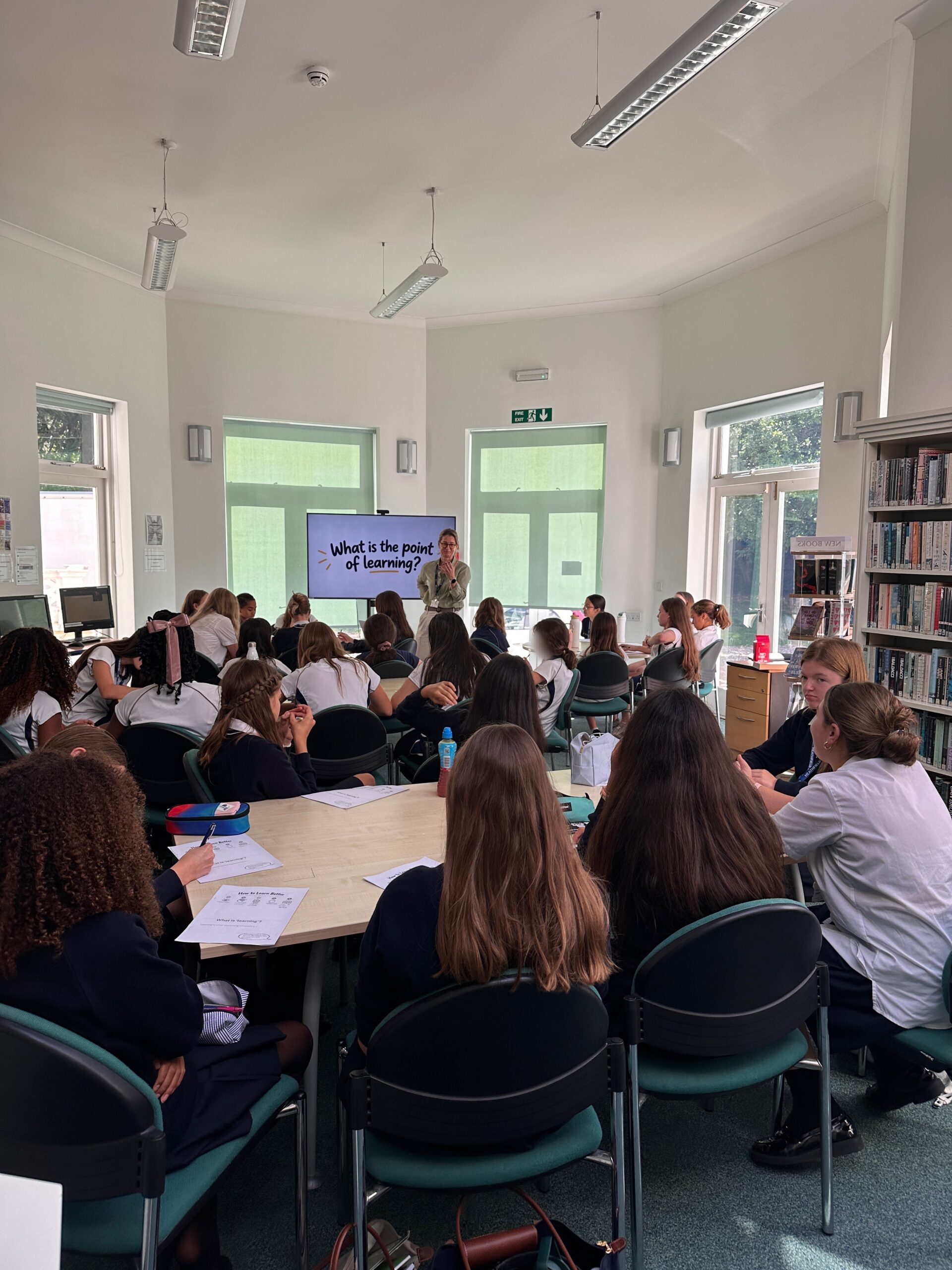
We have run a workshop with all year groups with a single aim: helping students understand how learning happens and then using that understanding to make better choices about how they study.
We explored the three most essential parts of learning: attention, working memory and long-term memory. Through a series of activities, students experienced just how selective our attention can be (imagine focusing so closely on players passing a ball that you do not notice a gorilla walking up, standing between them and waving at you!), and how quickly our working memory can become overloaded. One of the key messages was that our attention is precious: what we notice is what we think about, and what we think about impacts our learning. Protecting our attention is therefore important.
We then looked at long-term memory and the importance of trying to connect meaning to new learning. One simple way of doing this is to connect new information to something we already know. Students also explored something that can initially feel rather counter-intuitive: forgetting is a normal (and important) part of learning. Through retrieval practice and spaced repetition, we strengthen our memory and can effectively ‘upset’ Ebbinghaus’s Forgetting Curve – the idea that, without revisiting or retrieving information, we can forget a significant amount of what we have learned surprisingly quickly.
Finally, we explored some of the most and least effective study techniques according to research, with a particular focus on why some less effective strategies can feel so comforting: they make us feel productive, but do not necessarily produce strong learning. Examples include repeatedly reading or copying out notes, cramming, and highlighting large amounts of text. These strategies can produce familiarity because we recognise the content when it is in front of us, but recognising is not the same as being able to recall something independently.
The most important message from all of this for our students is that effective learning does not always feel easy – nor is it supposed to. Having to think hard, retrieve something from memory and sometimes struggle to remember is a crucial part of making learning stick.
Judith de Villiers, Assistant Head (Learning & Partnerships)